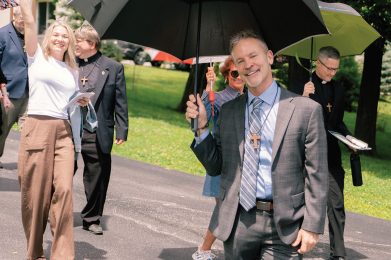
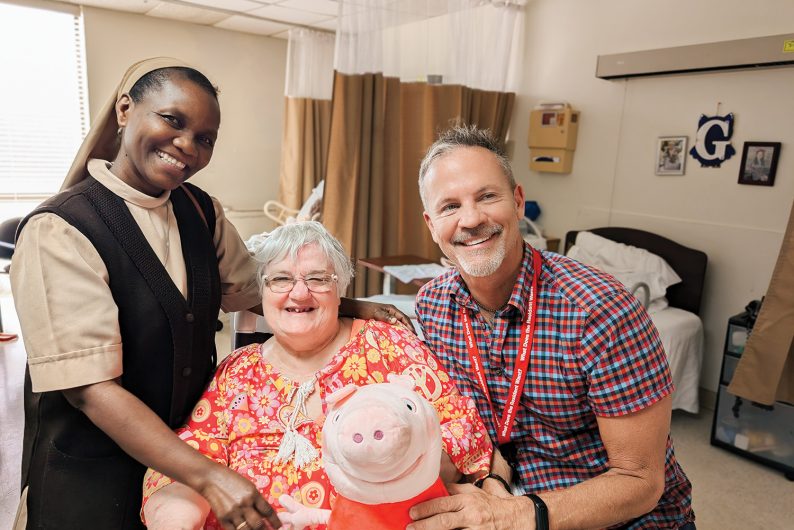
For the past five years, Brother Jude Smith has devoted a significant part of his ministry to supporting residents at long-term care facilities as a certified long-term care ombudsman. He received his first certification in 2021, but this ministry began long before when he cared for sick friends and family. After moving to Georgia in 2024 for a new assignment, Brother Jude was recertified so he could continue this “patient and holy work,” he says.
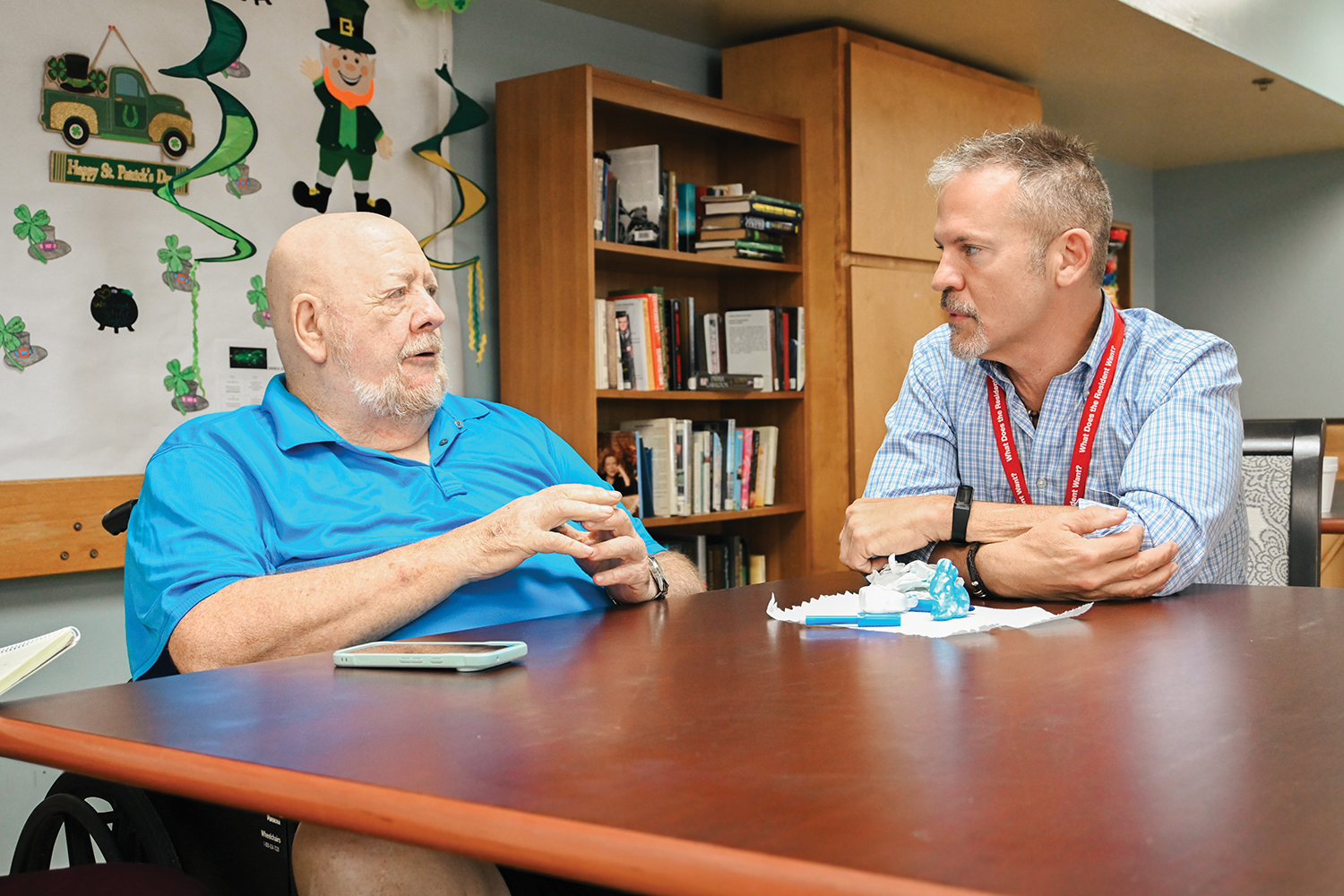
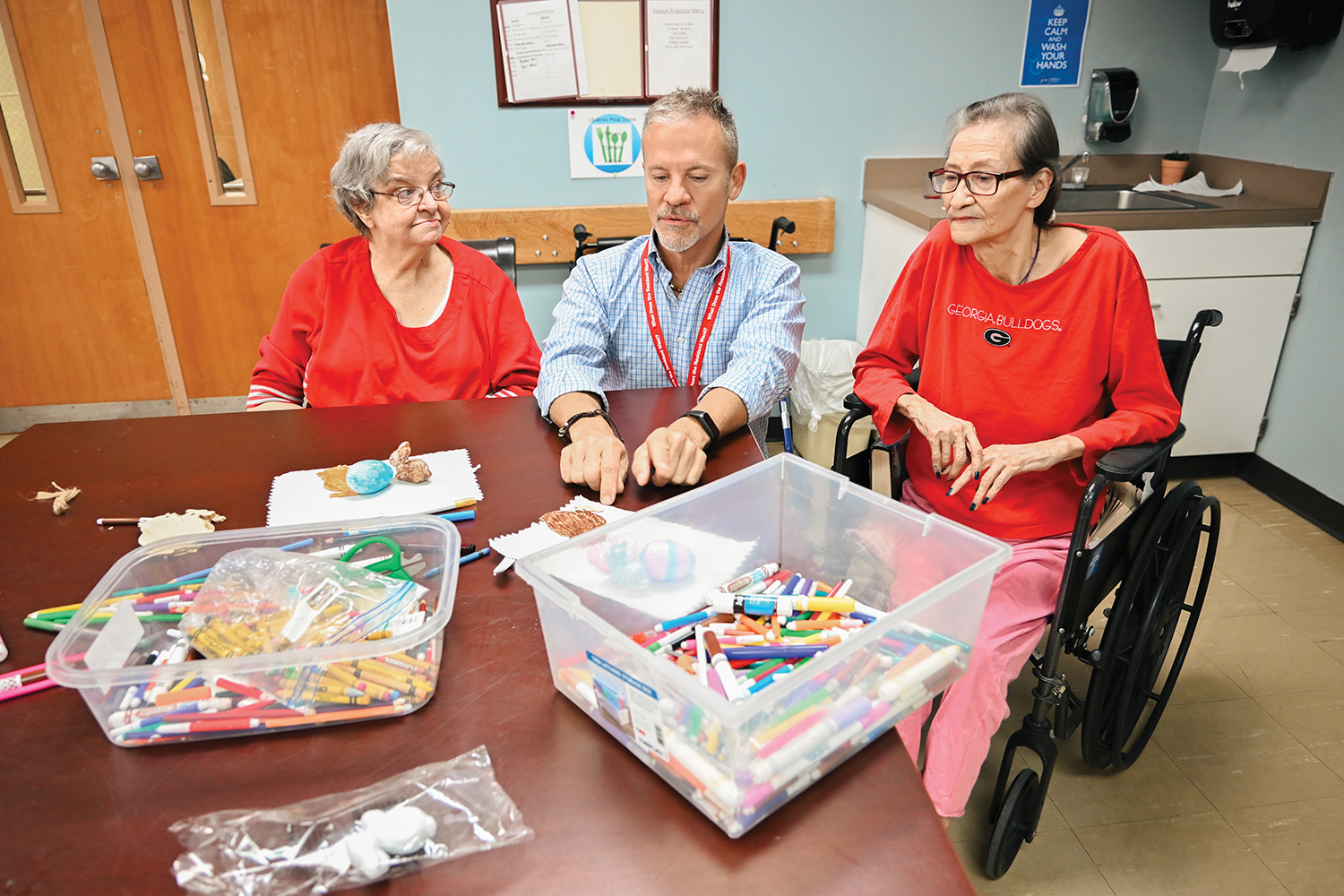
At Early Nursing and Rehabilitation Center in Blakely, Georgia, Brother Jude works closely with Resident President Dennis Mayne in advocating for patient rights.
“I met Jude about four years ago,” says Dennis. “He is a good man, a very good man.” Together, Dennis and Brother Jude listen. “We want the residents to feel like what they’re saying is heard, and they feel comfortable about speaking out for themselves.”
By Brother Jude Smith
Walking into a long-term care facility is like stepping into a world where time moves differently. Behind each door is a story: a teacher who inspired countless students, a farmer who tilled the land, a grandmother who held her family together through hard times. Too often, however, these stories are hidden beneath the routines of institutional living. Residents can feel powerless. They are usually dependent on others to provide for all their basic needs — food, medication, showering, mobility, or even listening to their concerns.
It is here that the ministry of a long-term care (LTC) ombudsman comes alive.
What is a long-term care ombudsman?
Ombudsmen are trained advocates who investigate complaints, mediate conflicts, educate residents on their rights, and work with staff and administrators to improve quality of life. Most importantly, they are a consistent, independent presence — able to visit facilities unannounced, listen without bias, and speak on behalf of those whose voices may be unheard.
A ministry of listening and advocacy
When I first began my work as an ombudsman in Knoxville, Tennessee, I thought of it as advocacy. Over time, I realized it was also a ministry. I was entrusted with visiting 12 facilities across the Knoxville district, each one with unique challenges. Some days, I was investigating serious allegations of neglect. Other days, I was simply holding a resident’s hand as they told their story. Always, I was there to make sure no one felt forgotten.
One woman in a Knoxville district facility quietly told me that she dreaded mealtimes. Staff members were in such a hurry that residents often went without assistance in eating. By the time someone returned, her food was cold. With her permission, I carried her concern to the administration, and together we arranged a plan for meal support that preserved her dignity. What may have seemed like a “small” issue to others was life-changing for her.
In another facility in Southwest Georgia, a young woman with a tracheotomy simply wanted to shower and wash her hair. The young woman and her mother made this request several times, but nothing changed. Beautifully stated, the young woman was less concerned about herself than about others who could not speak for themselves, which is often more than you could imagine. With their permission, I addressed her needs to the nursing administrator. That same day the young woman finally received a full shower.
By speaking up and trusting the ombudsman, she improved the quality of life and restored dignity for herself and others in that care unit.
My work also involves accompanying residents at the end of their lives. I remember visiting a hospice resident who had no family nearby. He told me, “I just don’t want to be alone.” My role was not to solve a problem, but to simply sit, listen, and pray with him. Advocacy sometimes requires taking action; other times it means being present.
The challenges of advocacy
This ministry is not always welcomed. I have walked into facilities where staff were wary of my presence, uncertain if I was there to find fault. Creating trust takes time and patience. You have to build relationships with residents, the staff, administrators, and anyone involved in the residents’ care. Some facilities are chronically understaffed, leaving caregivers stretched thin and residents vulnerable. At times, administrators resist outside
involvement, worried about scrutiny.
A Glenmary Mission Connection
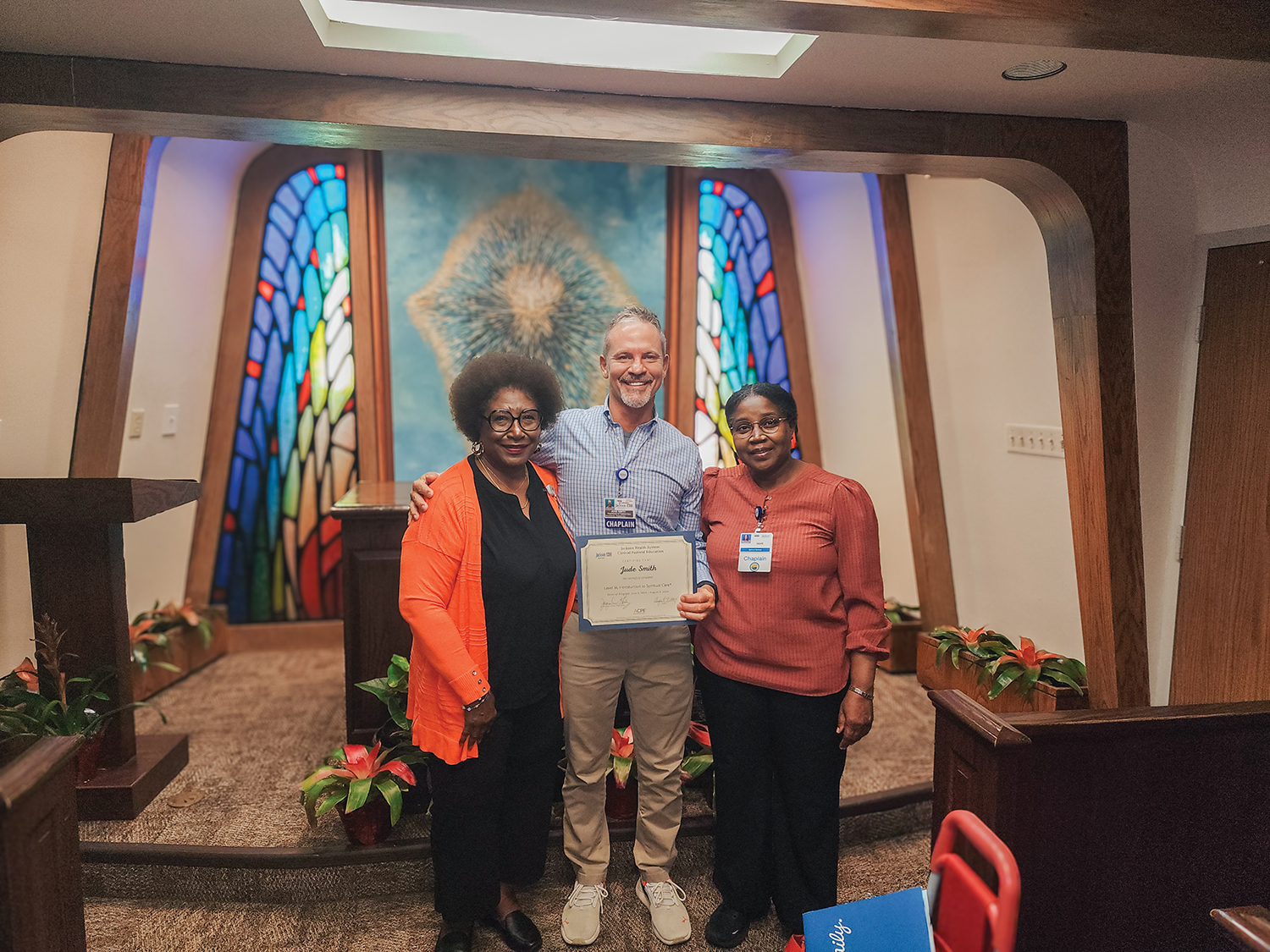
When I received my first Glenmary assignment in Blakely, Georgia, I wondered if this ministry would still find a place in my life. To my joy, it did. I reached out to the local district ombudsman, Sylenthea Streets, and got trained for the state of Georgia. With the help of Sister Imelda Ngwitu, we now reach out to nursing homes and other state-licensed facilities across eight counties.
In rural mission areas, facilities are often small and under-resourced. Some residents rarely receive visitors. To show up unannounced — not as an inspector, but as a friend and advocate — is a profound witness of Christ’s care for “the least of these.”
The heart of the ombudsman program is simple: every person deserves dignity. No one should suffer neglect, isolation, or abuse. For those of us in mission, this ministry is a way to live out the Gospel in a very practical way, by standing up for the vulnerable and ensuring that each life is honored.
As Matthew 25 reminds us: “Whatever you did for one of the least of these brothers and sisters of mine, you did for me.” To advocate for a resident who feels powerless is to advocate for Christ Himself.
I invite you to keep this ministry in your prayers. Pray for the residents who long for companionship and justice. Pray for the caregivers who labor under difficult conditions. Pray for the ombudsmen who walk into these facilities, carrying with them not only federal authority, but also the presence of Christ.
Because every resident has a story worth honoring. Every voice deserves to be heard. And in the quiet hallways of long-term care, where time moves slowly, God is still at work.
Brother Jude Smith made his final oath on May 23. He has served in Tennessee and Georgia.
This story was published in the Summer 2026 issue of the Glenmary Challenge.