Glenmary’s archivist keeps the mission of Father William Howard Bishop alive through his diaries and old photographs. By Theresa Nguyen-Gillen
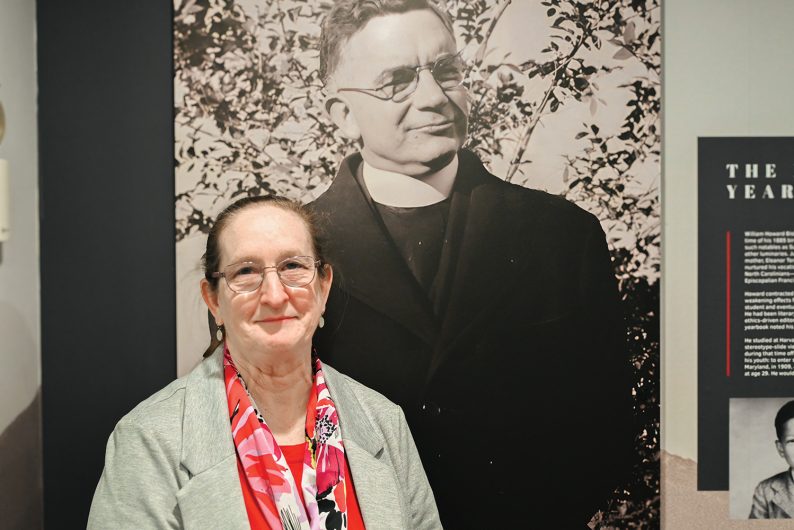
There are still a few living Glenmarians who met and knew Father William Howard Bishop, who founded Glenmary in 1939. He died in 1953 at the age of 67, explains Lucy Putnam, Glenmary’s archivist. For some, it doesn’t feel like that long ago. “But for a lot of people, that’s a long time,” she says.
So, for those members who never personally knew the founder, how do they stay connected to his mission and vision for the society? That’s where Lucy comes in.
Lucy, who has been the archivist for 23 years, is the keeper of the keys to all the historical writings, photographs, and artifacts that pertain to Glenmary and Father Bishop. “Early on, I decided I would make each department use this information to further the mission,” she says. “It’s making these records accessible, and it’s a good story to tell.”
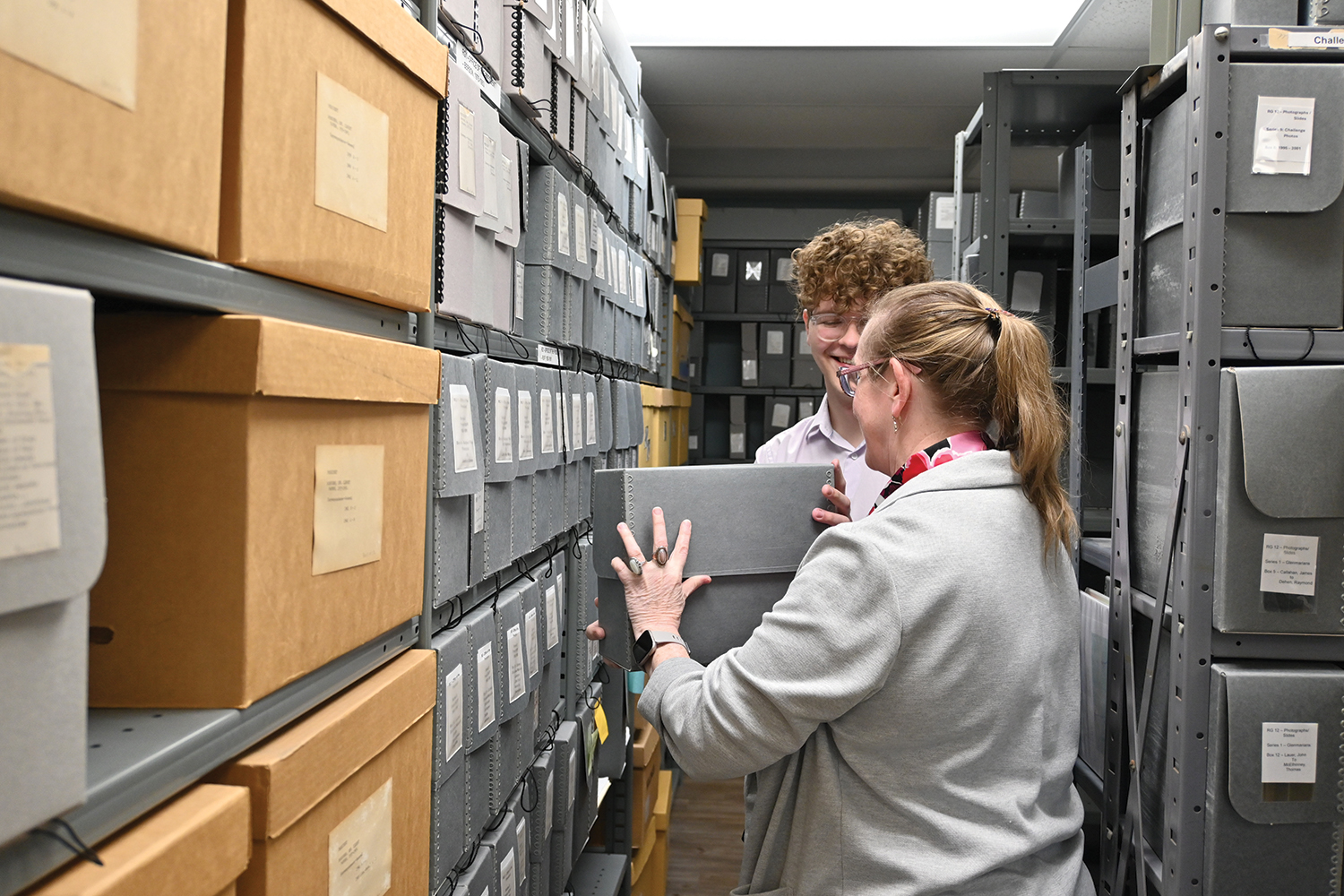
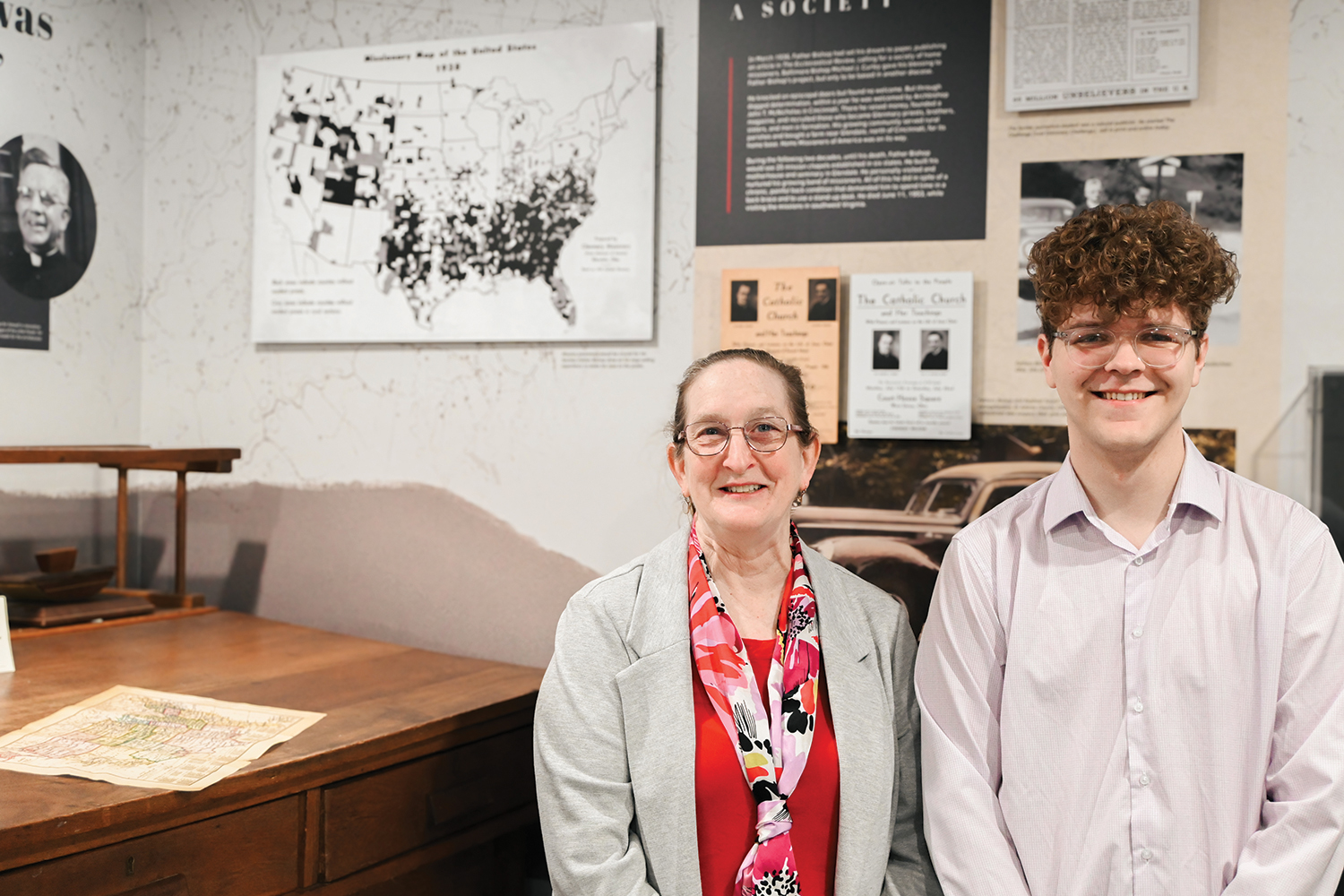
One project toward accessibility is digitizing old photographs. Lucy’s had the help of an intern this year, Jacob Craddock, a history student at Xavier University.
Jacob has spent several weeks importing and categorizing photographs into a digital library. Some of those photos include Brother Larry Johnson professing his final oath in 1984; Father Tom Kirkendoll celebrating a baptism on Easter Vigil in Dodge County, Georgia, in 1995; and Father Dominic Duggins and his building committee in 1991 looking over construction plans for a new church in Choctaw County, Oklahoma.
“Preserving history is really important,” says Jacob, “to have photos digitized because the paper will fall apart” and then one day they might be lost.
 Understanding the history
Another project that’s been years in the making is transcribing and annotating Father Bishop’s diaries. The first volume of his diaries dates from 1915 to 1919, the years right after he became a priest.
“I’m going through and annotating them and pointing out, OK, this is this person, and this is what he’s doing here,” Lucy says. “Tying his letters and family members and all this other stuff into it, which is really bringing life to the diary.”
At the time of Father Bishop’s writing, it was also a different time in the Catholic Church — before the Second Vatican Council. Lucy’s notes work to explain the circumstances and environment that he lived in.
“In one of the diaries he buys his first car in 1917,” she says. “I’m describing what kind of car it is.”
One hundred years ago, there wasn’t a gas station on every corner or the same kind of road infrastructure we have today. Father Bishop, traveling through rural areas, writes one day that he “still has a long way to go — 10 hours,” says Lucy.
In another diary entry, Father Bishop writes about making long distance phone calls. That’s another topic where Lucy annotates, as newer Glenmarians who read his diary might not know what a long-distance phone call is.
Understanding the context of how Father Bishop began the missions “puts a real human face to it,” Lucy says.
 Learning from experience
Today, Glenmary still continues to do historic work. In 2011, Glenmary opened new missions in Tennessee — Unicoi, Grainger, and Union counties — which hadn’t happened for a while.
Lucy told the missioners what information she needed about the establishment of these new missions for archival and record keeping purposes. “Several of the guys wrote diaries of how they called together the congregation, what they did each step of the way,” says Lucy. And afterward they came back and told her, “I’m glad I wrote it down.”
Those diaries came in handy years later when Father Don Tranel came to Smith County and established a mission in 2021. “He read those diaries,” says Lucy. And while everything that happened, recorded in those diaries, might not have been a success, they still are valuable lessons to have.
“Preserving history is important because you need to know where you came from to know where you’re going,” Lucy says. “History is not necessarily glorified past. It’s a litany of mistakes, things that didn’t work out but you learn from that and hopefully you don’t repeat the mistakes over and over. Everybody has a role to play in history. And you can’t learn from it if you don’t have it.”
This story was published in the Summer 2026 issue of the Glenmary Challenge.