A conference co-hosted by Glenmary last fall sparks reflection on the reality of polarization and how to overcome it.
By Lindsay Braud
Photos courtesy Saint Meinrad Archabbey
“Being missioners in the United States, we know firsthand the effects of divisions in our country, and we have ample experience seeking to build unity between groups of people that do not always agree or even engage each other,” says Father Aaron Wessman, Glenmary’s first vice president, reflecting on the need for grace and charity in an increasingly polarized society.
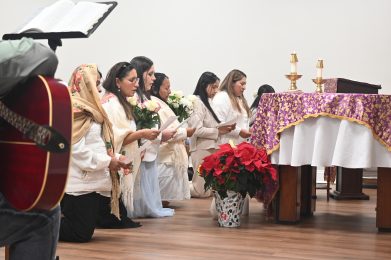
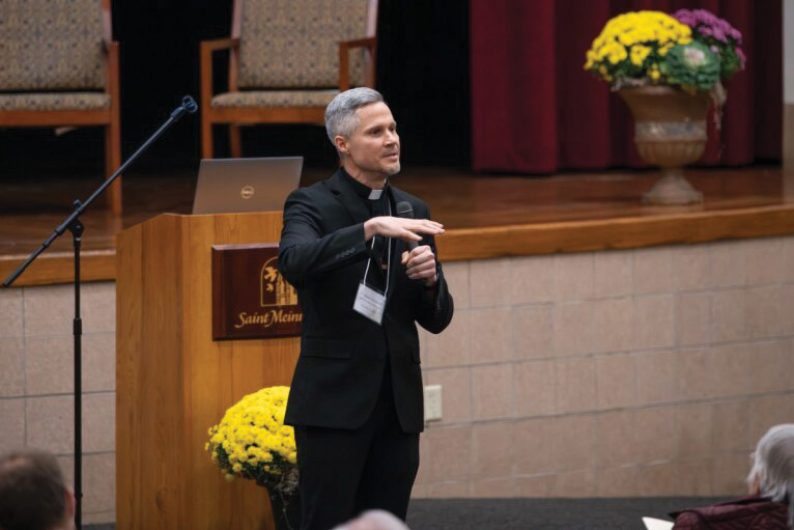
To address this challenge of polarization — toxic divisions in the US and between Christians in the Church — Saint Meinrad Seminary and School of Theology and the Glenmary Home Missioners co-sponsored “Deepening Communion in a Polarized World,” a conference held November 4–6, 2025, at Saint Meinrad.
This conference drew from Father Aaron’s own research on polarization, as outlined in his book The Church’s Mission in a Polarized World. In it, Father Aaron explains the complexity of polarization, while offering practical advice on how people can move past their divisions and, hopefully, strive to live in a more united and understanding society.
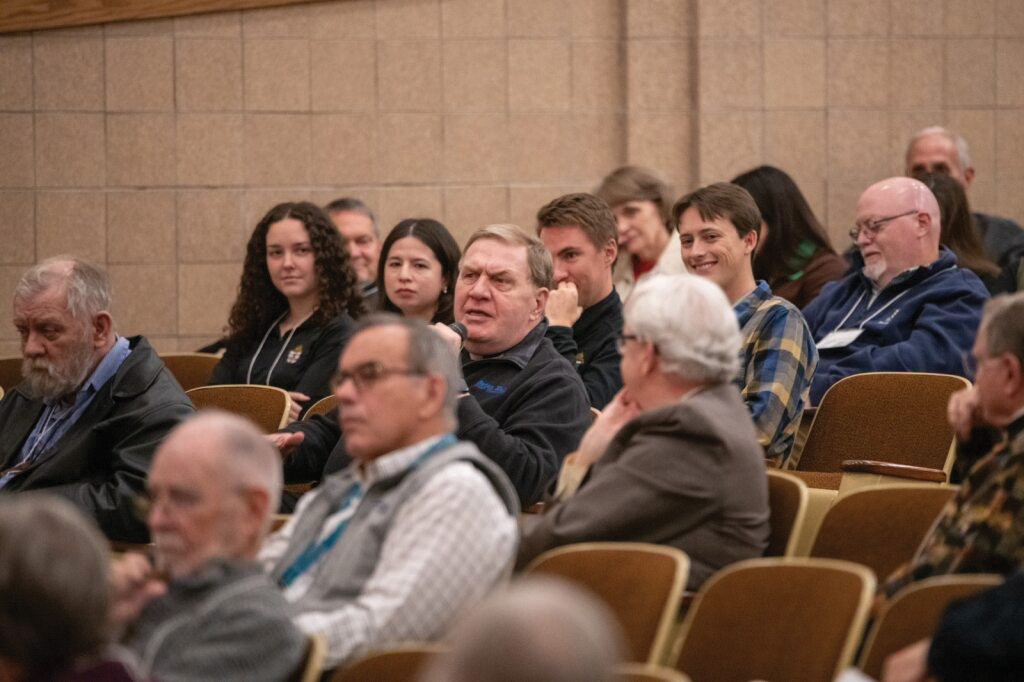
Bishops, priests, deacons, seminarians, religious, and lay Catholics from across the country participated in this three-day event. Father Del Staigers, pastor of St. Mary Magdalene Parish Family in Cincinnati, Ohio, attended the conference because he recognized the importance of this work.
“As a pastor I have to negotiate polarization every day in ministry. Society is deeply fractured, and the church, as a microcosm of the world, is also profoundly affected by polarization,” says Father Del.
The conference focused on four topics: episcopal leadership, the implementation of Vatican II, liturgy, and Catholic media. For each topic, several experts delivered opening remarks. Afterward they were invited to have a truthful, respectful conversation on what was shared.
In each panel people were asked to focus on the question: “What wisdom can you share with the group for the present moment we are living in?”
The conference “really renewed my spirits, particularly to keep working on depolarization and peacemaking,” says Polly Duncan Collum, director of Justice, Peace and Integrity of Creation for Glenmary. After the panels, attendees were encouraged to discuss what they had learned. “That’s where depolarization, or building communion, starts.”
 Understanding Polarization
Divisions in communities, and even the Church, are often rooted in broader societal and political trends.
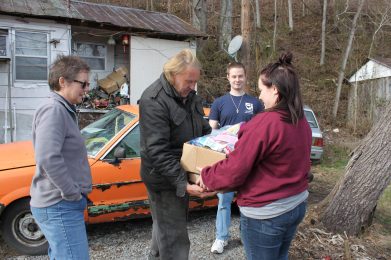
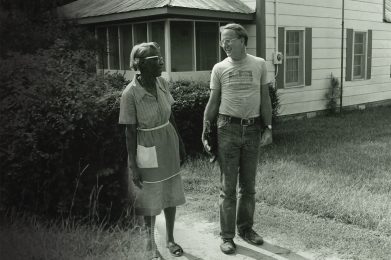
Polarization occurs when people silo themselves into like-minded groups and remain firmly entrenched inside that one worldview. We can see this played out across cultures and personalities. For example, there is this notion that rural folk and city folk have very little in common, or that ‘traditional’ Catholics and ‘progressive’ Catholics are always at odds with each other.
“It’s easy to think that the Church is a homogeneous group of people who understand our faith in exactly the same way. The reality is that if it were not for our common belief in Jesus Christ, we would have no reason to be together,” says Father Del.
This can leave people feeling defensive and angry, ultimately closing themselves off from the broader world.
“When we experience fear and uncertainty in life, we as humans tend to become somewhat rigid in our thinking and hold on to our groups for dear life,” adds Father Aaron.
Overcoming Fear and Division
Building unity starts with oneself. Rather than focus on what differentiates us, people should do an examination of conscience asking, “How much have I contributed to division and toxic polarization,” explains Father Aaron.
“One of the best ways to overcome polarization, after one continues to do an examination of conscience, is to ‘cross over,’ to engage a group to which they are not a part,” says Father Aaron. He acknowledges that this can be difficult to do, however.
We can cross over by occasionally attending a different parish or church, attending an ecumenical “deepening communion” event, or — for the extroverts of the world — simply striking up a conversation with a stranger. In online spaces we can engage in healthy discussions with people or take in news and media outside our regular sources.
In his book, Father Aaron suggests for those that do choose to cross over, to practice flexibility, curiosity, and prudence. Keep an open mind but be mindful of your physical and mental well being.
“Curiosity is essential to our Catholic faith. ‘Catholicity’ ultimately means seeing, or relating to, the whole. To be Catholic is to be open to truth, beauty, or goodness, no matter where these exist or are found,” says Father Aaron.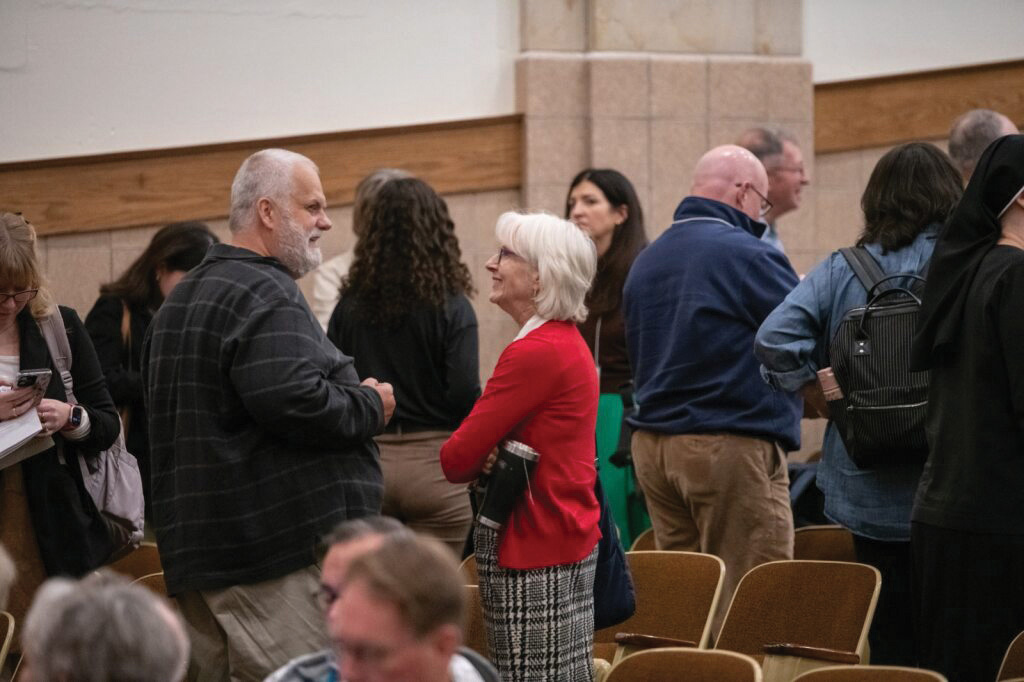
When confronted with a situation that challenges your perspectives, it’s helpful to ask a curious question such as “What am I missing?” or “Can you tell me more?”
During his talk at the conference, Cardinal Joseph W. Tobin of Newark, New Jersey, suggested a nuanced approach when overcoming divisions. “My experience tells me that polarization is not an issue that you can come at head-on. You have to come at it at a 45-degree angle, because if we come at it head-on, conversation is entirely defensive,” he said.
He also encouraged people to practice synodality, an approach promoted by the late Pope Francis and now Pope Leo XIV, and something that Father Del practices in his parishes.
“Synodality is the path that we are all invited to take in listening and understanding one another. By putting aside preconceived ideas and judgments we can critically assess how the Gospel, and not the political sphere, challenges the way we can dehumanize and dismiss ‘the enemy’ who can lead us to Christ,” says Father Del.
At the conference Archbishop Paul D. Etienne of Seattle, Washington, issued a reminder to always be mindful of Christ, the common denominator. It is through Jesus that Christians will learn to be attentive, merciful, and compassionate.
“In short, we learn to build the Kingdom of God,” he said.